



Policy
What Work Does Generative AI Do?
Essays SEP 8, 2026
By: Alexander Bick, Adam Blandin, David Deming, Tyler Schumacher
AI, Tech & Energy
Labor, Wages & Worker Power
 Browse All Resources
DEC 7, 2016
By: Nick Bunker
Is the U.S. labor market at “full employment”? This question may seem open and shut with the unemployment rate at 4.6 percent, according to the latest Employment Situation report (opens in a new tab). But some other data show some slack remaining in the labor market, including the employment rate for prime-age workers (opens in a new tab) and wage growth (opens in a new tab) that, while increasing, still has some room to grow. Data released this morning (opens in a new tab) as part of the Job Openings and Labor Turnover Survey might be helpful not only when looking at the health of the labor market, but also predicting when policymakers will decide that the labor market hits “full employment.”
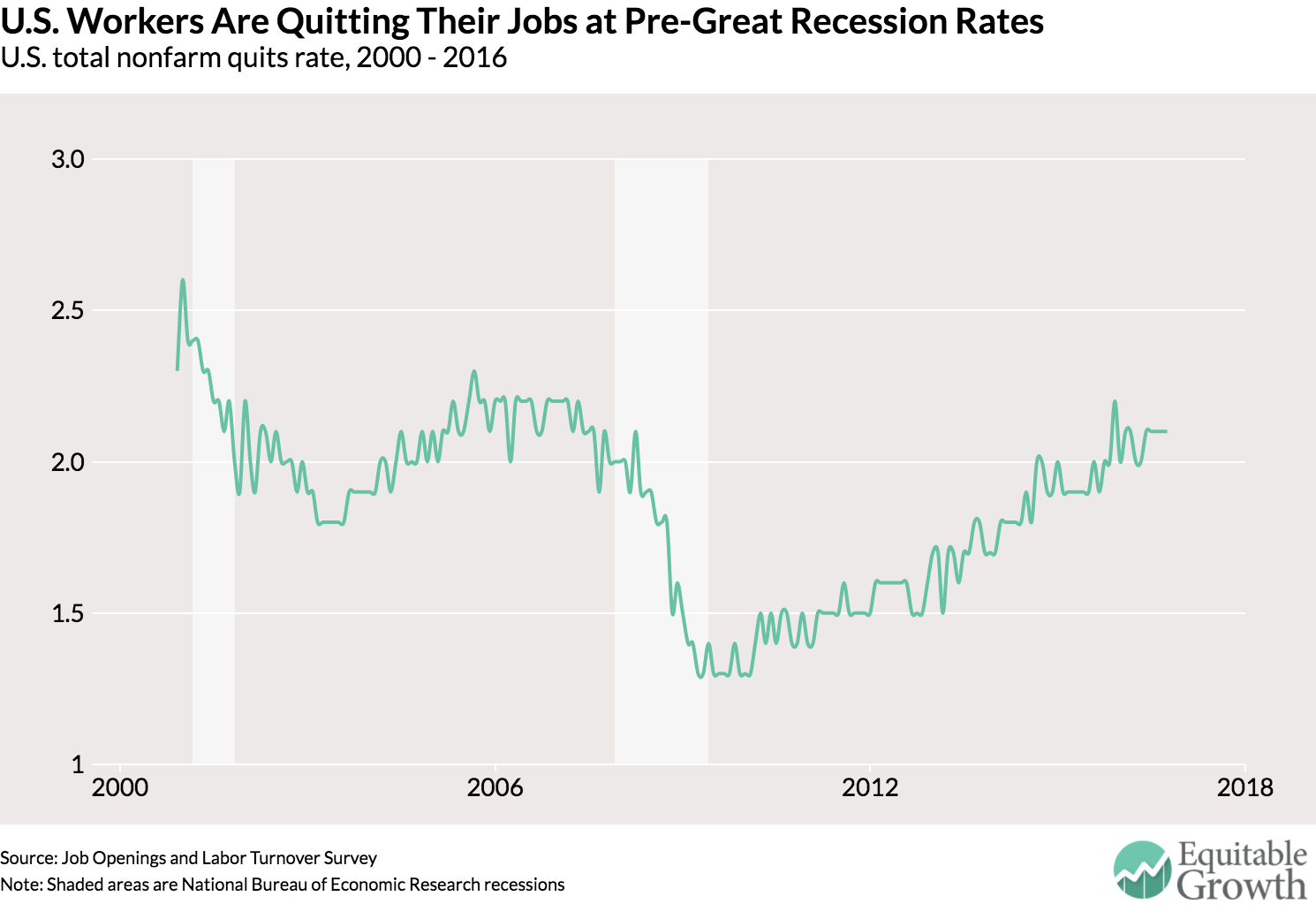
The rate at which workers quit their jobs is a good window into the health of the labor market. Quitting is a sign of worker confidence in their ability to find a new job. Workers will be more likely to quit when they see the labor market improving. Higher rates of quitting also are a sign that companies see the labor market tightening and are poaching more workers from other firms. As today’s Job Openings and Labor Turnover Survey shows, the quits rate is close to pre-recession levels, but data that cover a longer time than JOLTS show the current rates far below levels seen in the 1990s. (See Figure 1.)
Another metric is the number of hires per job opening, or the rate at which open jobs are being filled. When the labor market is weak, employers will have a relatively easy time filling open jobs. More unemployed workers means employers will have an easy time picking workers they find acceptable. As the labor market improves, job openings will be harder to fill and the number of hires per job opening will decline. Today’s figures show this “vacancy yield” has fallen over the course of the current recovery. (See Figure 2.) By this metric, the U.S. labor market is tighter than its pre-recession levels. But this may be due to a structural change in how easily employers can create jobs. So it may be difficult to look at this graph and know what level of the yield would constitute full employment.
Figure 2
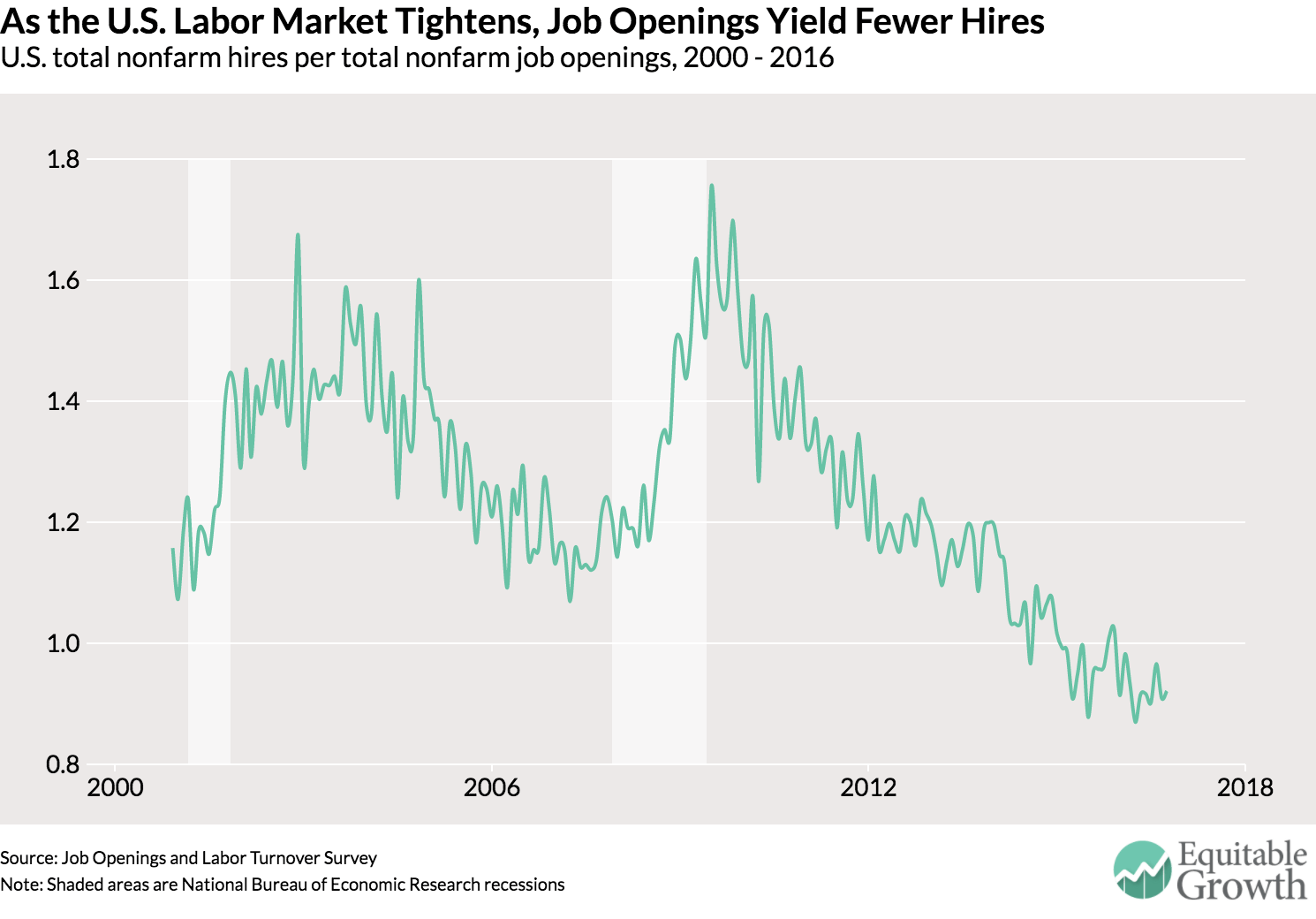
Figure 3
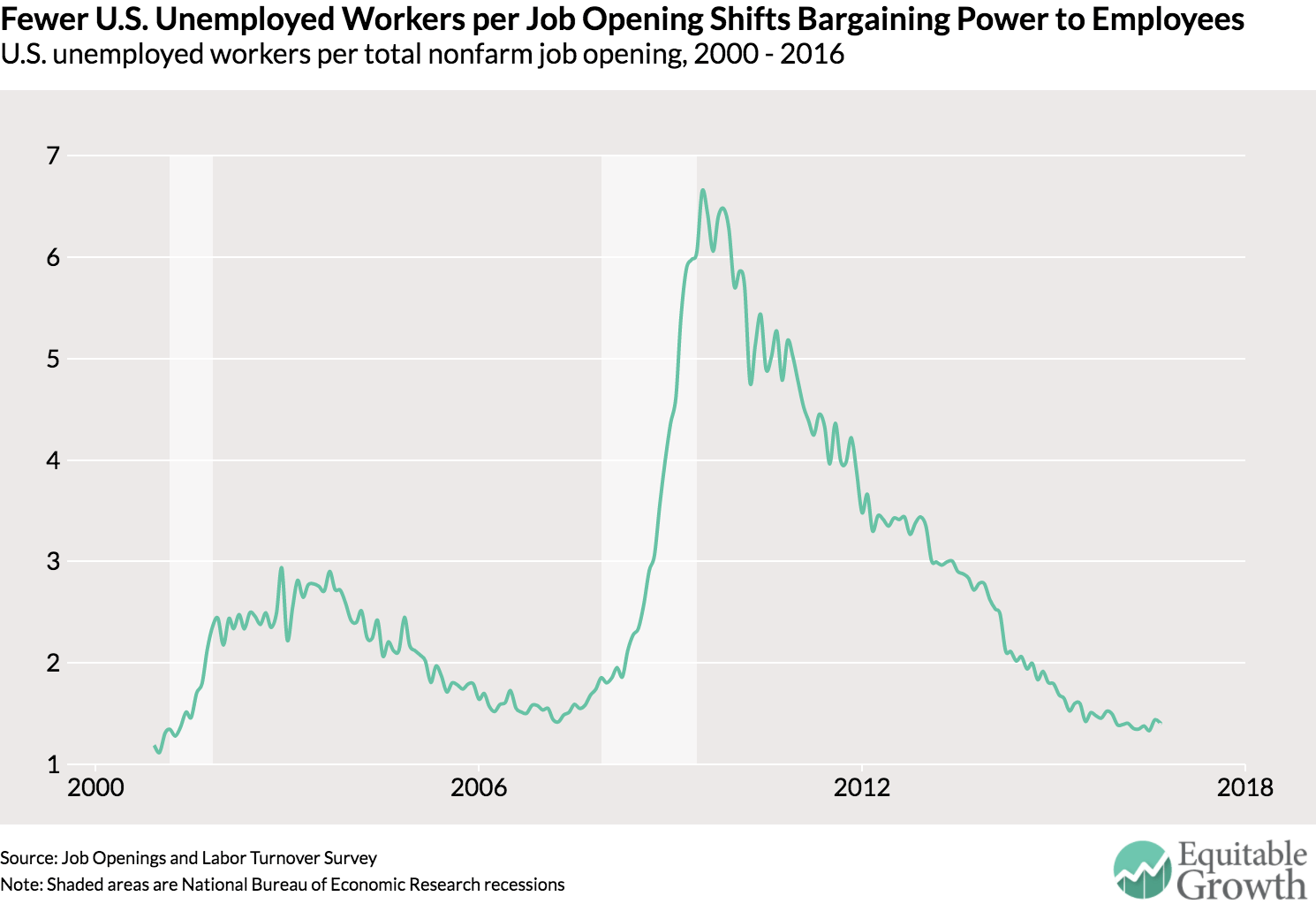
Overall these data show the U.S. labor market to be healthy and continuing its current trajectory toward full employment. How long it’ll take for the labor market to hit full employment is still up for debate.
Essays SEP 8, 2026
By: Alexander Bick, Adam Blandin, David Deming, Tyler Schumacher
Working Papers SEP 8, 2026
By: Alexander Bick, Adam Blandin, David Deming, Tyler Schumacher

Essays SEP 2, 2026
By: Megan Rivera
Get updates on our latest research, event announcements, and policy insights delivered straight to your inbox. Stay connected with the leading voices on equitable growth.


