



Policy
What Work Does Generative AI Do?
Essays SEP 8, 2026
By: Alexander Bick, Adam Blandin, David Deming, Tyler Schumacher
AI, Tech & Energy
Labor, Wages & Worker Power
 Browse All Resources
MAR 3, 2017
By: Nick Bunker

This is a weekly post we publish on Fridays with links to articles that touch on economic inequality and growth. The first section is a round-up of what Equitable Growth published this week and the second is the work we’re highlighting from elsewhere. We won’t be the first to share these articles, but we hope by taking a look back at the whole week, we can put them in context.
Bridget Ansel writes on new research about what happens to marriage in areas where work, specifically manufacturing work, disappears. Spoiler: gender norms play a role.
Why should policymakers care about a decline in business dynamism in the United States? New research suggests that slowing productivity growth and dynamism may be linked.
Two new papers were released as part of Equitable Growth’s working paper series. This week’s papers cover the effects of increased credit access on employment and proposed changes to corporate taxation in the United States.
One concern about the potential gains from pre-Kindergarten programs is that the gains appear to fade overtime. Kavya Vaghul argues that perhaps this fadeout could be eliminated by smoothing transition into educational levels.
Should policymakers be celebrating gross domestic product soon set to hit its potential growth rate? Should they feel the same if and when inflation hits 2 percent? Here’s the case that they shouldn’t.
How much of the consumption binge during the 2000s in the United States was due to rising income inequality? Contra some new research, Matthew Klein argues that inequality played an important role. [ft alphaville (opens in a new tab)]
For more than 25 years, the Japanese economy has been stuck in a funk. And despite innovative efforts to boost the economy by the Bank of Japan, a deflationary mindset seems to still have a hold, John Lyons and Miho Inada report. [wsj (opens in a new tab)]
Immigration and increased exposure to international trade are now popular culprits for increasing U.S. income inequality and wage stagnation. But Eduardo Porter argues that domestic factors—namely outsourcing and changing structures of work—are more likely causes. [nyt (opens in a new tab)]
Automation could potentially displace millions of U.S. workers from their jobs in years to come. Such a reality causes anxiety. But what if unpleasant jobs are among those eliminated? Alana Semuels looks at trucking and automation. [the atlantic (opens in a new tab)]
“Despite generations of generally rising college-graduation rates, higher education’s promise of significantly reducing income and wealth disparities across all races and ethnicities remains largely unfulfilled,” write William Emmons and Lowell Ricketts. [in the balance (opens in a new tab)]
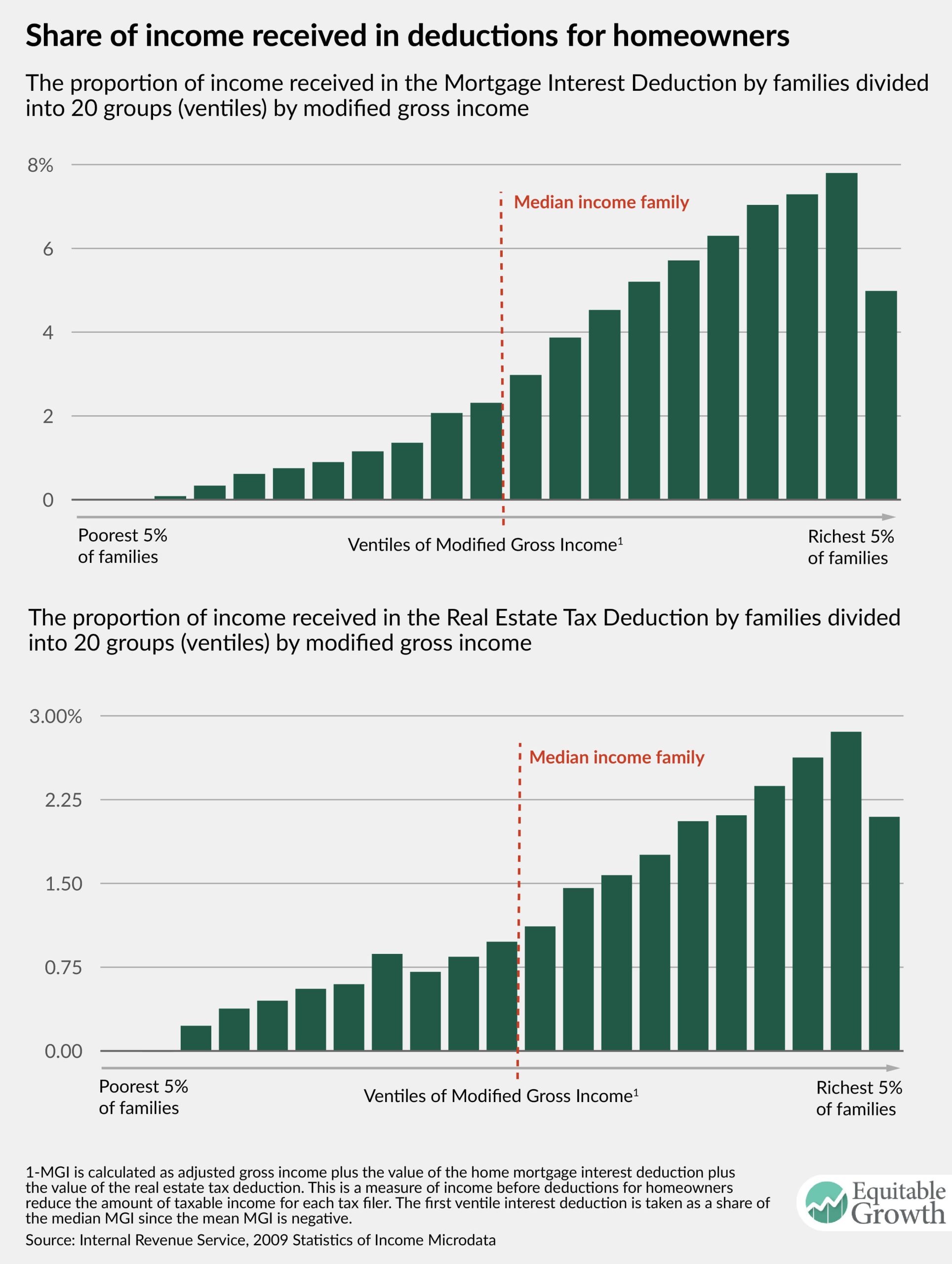
Figure from “U.S. homeownership tax policies are expensive and inequitable” by Nisha Chikhale
Essays SEP 8, 2026
By: Alexander Bick, Adam Blandin, David Deming, Tyler Schumacher

Essays SEP 2, 2026
By: Megan Rivera

Essays AUG 31, 2026
By: Christopher Bangert-Drowns
Get updates on our latest research, event announcements, and policy insights delivered straight to your inbox. Stay connected with the leading voices on equitable growth.


