




Policy
What Work Does Generative AI Do?
Essays SEP 8, 2026
By: Alexander Bick, Adam Blandin, David Deming, Tyler Schumacher
AI, Tech & Energy
Labor, Wages & Worker Power
 Browse All Resources
JUN 9, 2017
By: Kavya Vaghul

This is a weekly post we publish on Fridays with links to articles that touch on economic inequality and growth. The first section is a round-up of what Equitable Growth published this week and the second is the work we’re highlighting from elsewhere. We won’t be the first to share these articles, but we hope by taking a look back at the whole week, we can put them in context.
Central bankers often overlook income and wealth inequality when it comes to establishing monetary policy. But as Nick Bunker explains, new research teases out this interaction, finding that monetary policy can help increase consumption through redistributing income across households.
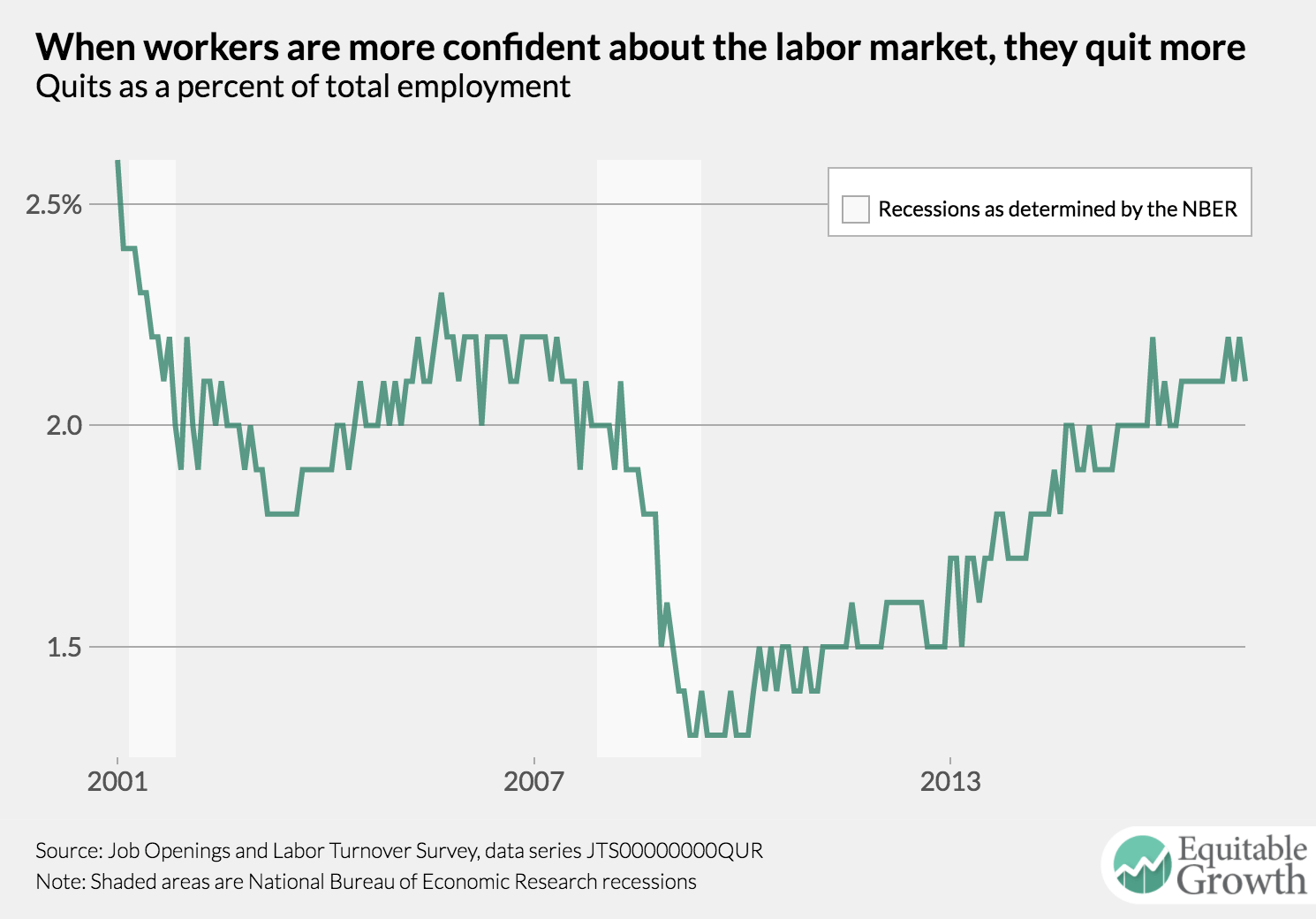
The latest data from the Job Openings and Labor Turnover Survery—more commonly known as JOLTS—on hiring, firing, and other labor market flows came out this week. Nick Bunker unpacks the numbers through a series of charts.
Is inequality affecting global macroeconomic and financial stability? Salvatore Morelli explores the question, asserting that growing inequality is hurting economies and argues that a more equal distribution of resources could be a benefit.
This week, Kansas’s state legislature voted to increase taxes, overriding the $1.2 billion in tax cuts ordered by Governor Sam Brownback. Gov. Brownback’s “’real-live experiment’ in conservative economic policy,” as Max Ehrenfreund puts it, failed to boost the economy, and even after the tax increase, poor Kansans will pay a greater percent of their income than the rich. [the washington post (opens in a new tab)]
Speaking of taxes, in general, the poorest Americans pay a surprisingly high percent of their income in taxes. Vanessa Williamson elaborates on just how much those at the bottom pay and how it contradicts common perceptions about taxpayers in the U.S. [pbs (opens in a new tab)]
Corporate governance reform has seen mixed results, argues John Matsusaka. Reforms that help grow a firm’s exposure to competition are important, but at the same time reforms that give special interest shareholders more strength have been detrimental. [pro-market (opens in a new tab)]
Carola Binder takes a closer look at labor market trends that help explain why the United States continues to experience low core inflation at a time when unemployment is low. She posits that a paper by Christopher Erceg and Andrew Levin offers a compelling rationale. [quantitative ease (opens in a new tab)]
Tech companies have been increasingly dipping their toes into the U.S. public education system. But these philanthropic efforts may not be improving educational achievement. In fact, Natasha Singer finds that they are swaying school policies to benefit the tech industry. [new york times (opens in a new tab)]
Essays SEP 8, 2026
By: Alexander Bick, Adam Blandin, David Deming, Tyler Schumacher

Essays SEP 2, 2026
By: Megan Rivera

Essays AUG 31, 2026
By: Christopher Bangert-Drowns
Get updates on our latest research, event announcements, and policy insights delivered straight to your inbox. Stay connected with the leading voices on equitable growth.


