



Policy
What Work Does Generative AI Do?
Essays SEP 8, 2026
By: Alexander Bick, Adam Blandin, David Deming, Tyler Schumacher
AI, Tech & Energy
Labor, Wages & Worker Power
 Browse All Resources
SEP 15, 2017
By: Liz Hipple

This is a weekly post we publish on Fridays with links to articles that touch on economic inequality and growth. The first section is a round-up of what Equitable Growth published this week and the second is the work we’re highlighting from elsewhere. We won’t be the first to share these articles, but we hope by taking a look back at the whole week, we can put them in context.
Tax reform is unlikely to benefit workers, argues Kimberly Clausing. Cutting corporate tax rates is an indirect mechanism with no guarantee it will translate into higher wages for workers, versus cuts to payroll and labor income tax cuts.
The release this week of the U.S. Census Bureau’s annual report on income and poverty underscores why better official measures of economic inequality are sorely needed, write (opens in a new tab) Heather Boushey and Austin Clemens. The incorporation of higher-quality data and inclusion of more sources of income into the official measurement of inequality would allow for a better understanding of how income and wealth inequality are growing and changing.
Nick Bunker discusses a new working paper that examines the rise in price markups by companies in the United States as an indicator of increasing market power and the macroeconomic implications of that rise, including the decrease in wages for less-educated workers, falling labor force participation, and a decline in aggregate output.
The U.S. Bureau of Labor Statistics released new data on hiring, firing, and other labor market flows from the Job Openings and Labor Turnover Survey, better known as JOLTS. Check out the key graphs from the report chosen by Equitable Growth staff.
In a new brief, Greg Leiserson shows (opens in a new tab) how the tax rate on business-level capital income is much lower than the 35 percent statutory rate. In fact, the average effective marginal tax rate is only 8 percent under current law.
What do people mean when they say we need to revive antitrust? Matt Yglesias rounds up the most common policy ideas and areas of consensus/debate on this hot topic. [vox (opens in a new tab)]
Why do workers pay twice as much in taxes as wealthy investors? Ben Steverman breaks down how income from wages versus investments is taxed, how we got here, and what tax reform might mean for these rates. [Bloomberg (opens in a new tab)]
Were we closer than we ever realized to having a universal basic income in the United States? Ezra Klein and Dylan Matthews reveal that Hillary Clinton’s presidential campaign seriously considered adopting the policy in its platform—but couldn’t make the numbers work. [vox (opens in a new tab)]
There’s a record-high level of job openings according to the latest numbers from the U.S. Department of Labor. But that doesn’t necessarily mean the labor market is tighter, explains Eric Morath. A number of factors, including the ease of posting jobs on the internet and a skills mismatch, could explain openings continuing to outpace hiring. [wsj (opens in a new tab)]
New analysis of the Panama Papers by researchers Annette Alstadsaeter, Niels Johannesen, and Gabriel Zucman finds that global wealth inequality is even worse than it appears in standard, publicly available economic data due to the use of offshore tax havens. [business insider (opens in a new tab)]
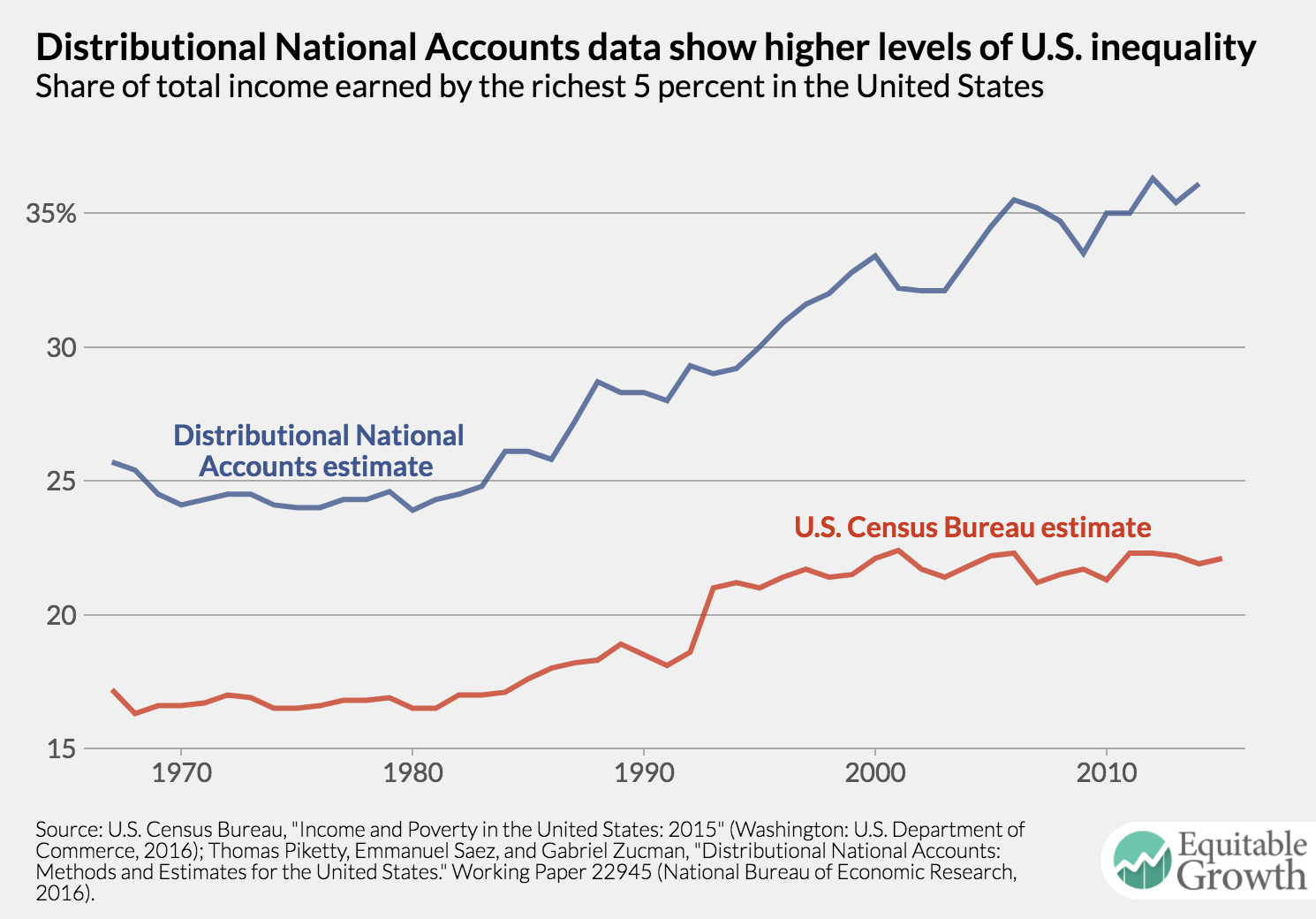
Figure is from Equitable Growth’s “Latest official estimates underreport extent of inequality in the U.S. (opens in a new tab)”
Essays SEP 8, 2026
By: Alexander Bick, Adam Blandin, David Deming, Tyler Schumacher

Essays SEP 2, 2026
By: Megan Rivera

Essays AUG 31, 2026
By: Christopher Bangert-Drowns
Get updates on our latest research, event announcements, and policy insights delivered straight to your inbox. Stay connected with the leading voices on equitable growth.


